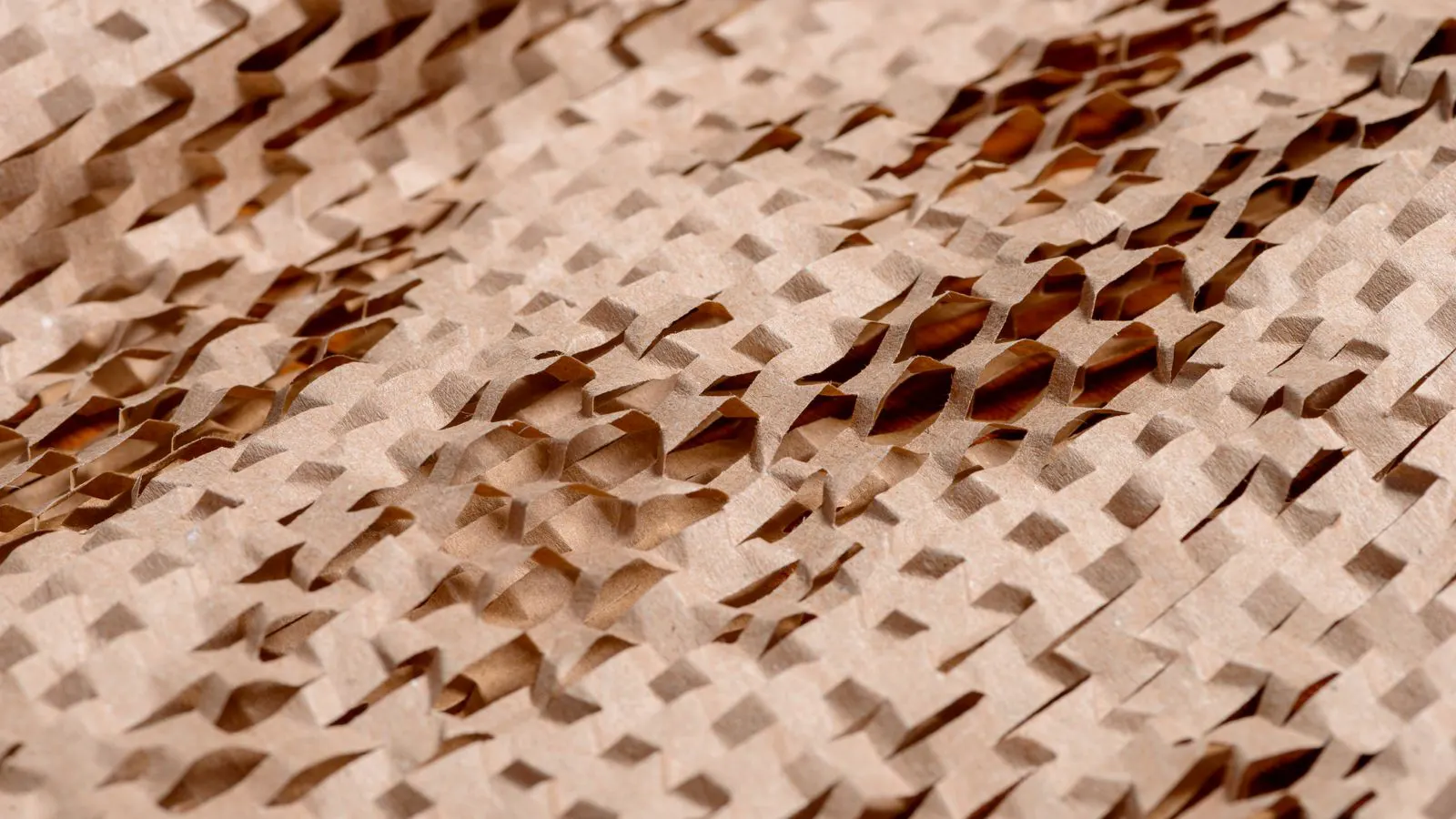
Board fluting thickness refers to the distance between the peaks of the corrugated flutes. Thicker flutes increase cushioning and stacking strength but raise material cost and weight. Sourcing decisions must balance these factors against product requirements.
- Board fluting thickness measures the full height of the corrugated flute from trough to peak.
- Thicker flutes provide better cushioning and stacking resistance but increase weight and cost.
- Profile shape and board grade work together with thickness to determine final box performance.
- Specify thickness in millimeters or microns to avoid ambiguity with flute types like B, C, E, or G.
When you open the door of a shipping carton, the first thing you notice is the corrugated edge. That ridged line is the board fluting. It is not just a visual detail. It is the structural core of the box.
The board fluting thickness is the distance measured from the bottom of the trough to the top of the peak. It is a single, critical dimension. It changes how the board resists compression, bending, and impact. It also changes the material weight, the cost per square meter, and the final shipping dimensions.
What is the difference between board fluting thickness and flute type?
Flute type and fluting thickness are related but distinct. Flute type refers to the profile shape and relative size of the ridge. Common types are often labeled A, B, C, E, F, and G. These labels identify the approximate flute height and profile width.
Board fluting thickness is the measured physical dimension of that profile. A “B flute” board, for example, has a specific target thickness, usually around 3.2 millimeters. A “G flute” board is much thinner, often near 1.0 millimeter. The flute type tells you the category. The thickness tells you the exact specification.
In practice, suppliers quote by flute type because it is the industry shorthand. However, when you are engineering a box for heavy or fragile contents, you need the exact thickness. A variation of even 0.2 millimeters can change the stacking strength and the crush resistance of the final carton.
How does thickness affect protection?
Protection in a corrugated carton comes from three main forces. The first is cushioning. The second is stacking strength. The third is edge crush resistance.
Cushioning happens because the flutes act like a series of small springs. When a drop occurs, the flutes compress, absorb energy, and rebound. Thicker flutes have more air space. They compress further before reaching their limit. This gives the board more capacity to absorb shock without permanent deformation. A box made with a thick flute can protect a product from a drop that would crack a box made with a thin flute.
Stacking strength relies on the board’s ability to resist compression from above. Thicker flutes have more solid paper in the profile. They can carry more weight before the flutes collapse. This is why high-volume logistics providers often use thicker flutes for boxes that sit at the bottom of a pallet stack.
Edge crush resistance is the ability of the box edge to withstand pressure. This is critical when the box is loaded into a truck or handled by a forklift. Thicker flutes generally offer better edge crush resistance, but the bond strength of the adhesive and the quality of the paper face also matter.
How does thickness affect cost and weight?
Thicker fluting uses more paper. That is the simplest explanation. The volume of the flute profile increases, which requires more board material per square meter. More material means higher raw material costs.
Weight is the second direct impact. Heavier cartons cost more to ship. Many carriers charge by dimensional weight or actual weight. If a product is light, a thick flute box may weigh more than the product itself. This erodes the cost advantage of the added protection.
There is a trade-off curve here. A thin flute box is cheap to produce and cheap to ship. A thick flute box is expensive to produce and expensive to ship. The optimal choice is not always the thickest board. It is the thinnest board that meets the protection and stacking requirements of the specific application.
How does board grade interact with fluting thickness?
Fluting thickness works together with the paper grade. The paper grade refers to the basis weight and strength of the paper faces that sandwich the flutes. The faces are usually made from kraft paper, white paper, or a combination.
A thin flute with a heavy, high-grade paper face can outperform a thick flute with a light, low-grade paper face. The faces resist bending and puncture. The flutes resist compression. If the faces are too weak, the box will fail at the surface level, even if the flutes are strong.
When sourcing, look at the combined specification. A supplier might offer a “C flute, 160gsm face” board. They might also offer a “C flute, 250gsm face” board. The thickness is the same. The protection and cost are very different. Always specify both the flute thickness and the face weight to get an accurate quote.
How do you choose the right thickness for your product?
The selection process starts with the product’s fragility. Ask how the product fails. Does it crack? Does it deform? Does it break on impact? A glass bottle requires different protection than a plastic bottle. A glass bottle requires a board that resists sharp impacts. A plastic bottle may only need a board that resists crushing.
Next, consider the shipping environment. Will the box sit on a pallet in a warehouse? Will it be stacked? Will it be thrown? The more handling and the higher the stack, the thicker the flute should be.
Finally, check the regulatory and customer requirements. Some retailers or shippers have specific board strength standards. They may require a minimum edge crush value or a specific flute type. These requirements can override your initial engineering preference.
Worked example: Sourcing a box for a ceramic mug
Imagine you are sourcing a box for a ceramic mug. The mug is heavy and fragile. It will be shipped in a stack of four boxes per layer. The total stack height will be three layers.
If you use a G flute board, it is very thin. The flutes have little air space. They will compress easily. The stacking weight will crush the bottom flutes. The mug will break during handling.
If you use a D flute board, it is thicker. It has more cushioning. It can handle the stacking weight better. The cost is higher than the G flute. The weight is higher. But the protection is sufficient for the application.
If you use a B flute board, it is even thicker. It provides a large safety margin. The cost is the highest. The weight is the highest. For a single mug, this may be overkill. The extra strength is not needed.
In this case, the D flute is often the practical choice. It balances protection, cost, and weight. The board fluting thickness is the deciding factor. It determines whether the box survives the warehouse handling and the delivery drop.
Common mistakes in specifying board fluting thickness
The first mistake is confusing flute type with thickness. A buyer might request a “B flute” without specifying the exact thickness. Suppliers may interpret this differently. Some use 3.0 mm. Others use 3.2 mm. This creates inconsistency in production.
The second mistake is ignoring the face weight. A buyer focuses on the flute thickness but chooses the lightest paper face to save money. The flutes are strong, but the faces tear easily. The box fails during die-cutting or assembly.
The third mistake is not testing the final box. Engineers may calculate the board strength on paper. They do not test the assembled carton. The adhesive quality, the die-cutting angle, and the tape application all affect the final strength. Always request a sample box and run a compression test.
Final thoughts
Board fluting thickness is a core variable in corrugated packaging. It determines the balance between protection, cost, and weight. It is not a standalone factor. It works with the flute profile, the paper grade, and the box design.
When you are choosing a supplier, ask for the exact thickness in millimeters. Ask for the face weight. Ask for the edge crush value. These three numbers give you a clear picture of the board’s performance. Do not rely on the flute type label alone. The label is a category. The measurements are the specification.
By understanding how board fluting thickness influences the final box, you can make sourcing decisions that protect your product and control your costs. You can avoid over-engineering. You can avoid under-engineering. You can find the sweet spot for your specific application.
Frequently asked questions
What is the standard unit for measuring board fluting thickness?
Board fluting thickness is typically measured in millimeters or microns. Millimeters are common for international sourcing. Microns are used in some technical documents for precise specifications.
Can I use a thinner flute if I increase the paper face weight?
Yes, but with limits. A heavier paper face improves puncture resistance and bending strength. It does not fully replace the cushioning and stacking capacity of a thick flute. The two properties serve different functions.
How does board fluting thickness affect the final box weight?
Thicker flutes increase the board weight per square meter. This adds directly to the gross weight of the carton. Heavier boxes may incur higher shipping costs. Always factor the board weight into your total landed cost.
Are thicker flutes always better for protection?
No. Protection depends on the specific failure mode. A thick flute may not help if the product fails due to puncture or vibration. A thin flute with a heavy face might be better for a product that is prone to surface damage.
How do I verify the board fluting thickness from a supplier?
Ask for a technical data sheet or a mill certificate. You can also measure the sample yourself using a micrometer. Measure multiple points across the board to ensure consistency. Record the average thickness for your quality control records.