Automated packaging inspection is moving from pilot projects to standard practice in corrugated supply chains. Buyers must prepare for tighter tolerances, digital traceability, and new audit requirements as AI quality control becomes common. This outlook covers six shifts you should plan for.
- Automated packaging inspection will change how you verify carton quality, from dimensional checks to surface defect detection
- AI quality control systems will demand clearer specification language and structured data exchanges with suppliers
- Future packaging tech will require you to update audit checklists, contracts, and acceptance criteria
- Digital inspection records will become a standard part of supplier quality documentation
- Early adoption of inspection data standards will reduce costly rework and disputes
Where automated packaging inspection stands now
Automated packaging inspection sits at the intersection of vision systems, machine learning, and production line integration. Most corrugated converters use basic automated checks for fluting direction, board thickness, and dimensional accuracy. Surface inspection for print defects remains more manual in many plants, though this is changing quickly.
The shift is not about replacing human judgment. It is about moving from sampling to full production monitoring. A plant that inspects 5 percent of a production run can miss a recurring defect pattern. A camera system that watches every carton can catch that pattern on the first unit that deviates.
For buyers, this changes the conversation. You are no longer only asking whether a supplier passes a sample. You are beginning to ask how they monitor the entire run, how long the inspection record exists, and what happens when a defect is detected in real time.
Shift one: from sample-based acceptance to continuous monitoring
Traditional carton acceptance often relies on AQL sampling. You receive a carton, pull a sample, check dimensions, print alignment, and edge quality. If the sample passes, the lot passes. That method works for stable production but struggles with intermittent defects.
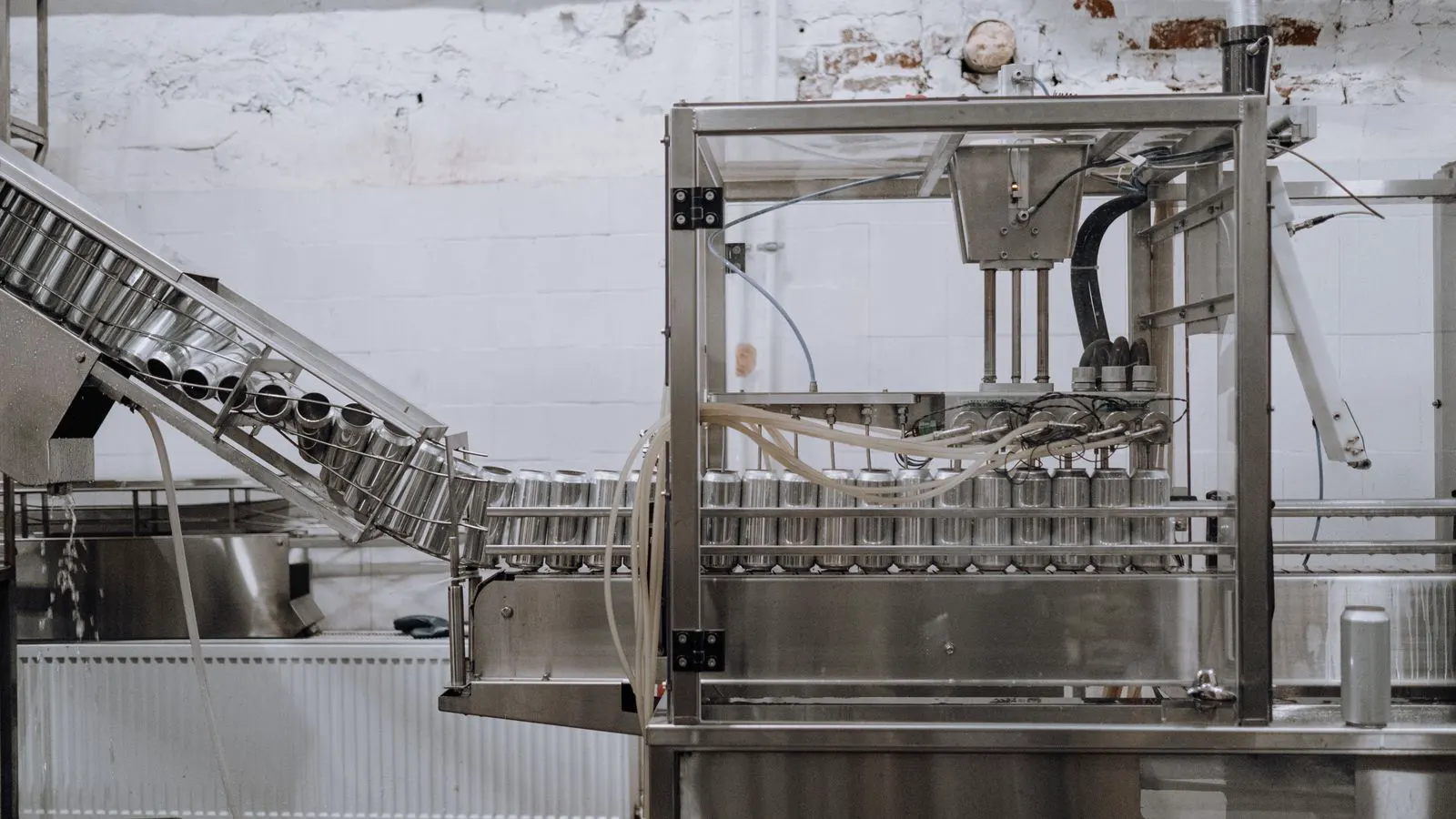
Automated packaging inspection changes this by watching the full run. Cameras mounted at the print head, lamination, die-cutting, and gluing stations capture high-resolution images of each unit. Software compares those images against a digital reference of the approved artwork and specification.
The practical effect is that defects that once slipped through a sample now show up in a production report. A misregistered print line, a thin board area, or a inconsistent glue pattern gets flagged before the carton reaches the end of the line.
This shift means your acceptance criteria need to move beyond “looks right on the sample.” You should start defining acceptable defect rates per unit, not just per lot. If a supplier can show you a 99 percent pass rate across 5,000 units, that is a different level of assurance than a 100 percent pass rate on 10 units.
Shift two: AI quality control demands clearer specifications
AI quality control systems need structured inputs to work well. A human inspector can interpret “good print” based on experience and context. A machine needs a definition.
If your artwork specification says “acceptable ink bleed under normal lighting,” an AI system may struggle with that language. It needs parameters like maximum bleed distance in millimeters, minimum contrast ratio between ink and board, or a threshold for color deviation.
This creates a new layer of work for buyers. You will need to write specifications that are machine-readable. That means using measurable units, defining acceptable ranges, and separating critical defects from cosmetic ones.
A practical step is to work with your supplier to build a defect classification table. List each defect type, assign a severity level, and define the pass or fail threshold. For example:
| Defect Type | Severity | Pass/Fail Threshold |
|---|---|---|
| Print misregistration | Critical | Over 0.5 mm offset from approved artwork |
| Board thickness deviation | Critical | Outside plus or minus 10 percent of specified ECT |
| Surface scratch on printed face | Cosmetic | Less than 5 mm length and not in die-cut window |
| Glue pattern irregularity | Critical | Visible glue on exterior surface or flap failure |
| Color deviation | Critical | Delta E above 2.0 from approved proof |
| Flap scoring offset | Critical | Scoring line outside plus or minus 1 mm of target position |
This table becomes a shared reference for both your team and the supplier’s inspection software. It removes ambiguity and makes automated packaging inspection results comparable across shifts and production lines.
Shift three: digital traceability becomes a supplier requirement
When inspection is automated, the data trail becomes as important as the physical carton. Each carton can carry a digital record of its inspection status. That record includes timestamp, station, defect type, and operator or system ID.
For high-value packaging, this traceability matters. If a retail display carton shows a print defect in the field, you can trace it back to a specific production run, a specific shift, and a specific machine station. That information shortens the investigation and speeds up corrective action.
Suppliers who maintain this level of digital record will stand out. They can show you not just that a defect was found, but where and when it occurred and what was done to correct it.
You should ask suppliers about their data retention. How long do they keep inspection logs? Can they export the data in a format your team can use? If you are managing multiple suppliers, you may want a common data format so you can compare inspection results across different plants.
Shift four: inspection data will reshape supplier audits
Your supplier quality audit checklist may need updating. Traditional audits focus on physical checks: board storage, machine maintenance, sample results, and operator training. That still matters. But you will also need to audit the inspection system itself.
What to look for during an audit:
- Camera placement and coverage. Do cameras inspect every critical surface? Are there blind spots at the die-cutting station or the gluing area?
- Software validation. How often is the AI quality control model recalibrated? Who approves the reference images used for comparison?
- Defect response protocol. What happens when the system flags a defect? Is there a clear stop-and-review process, or does the line just keep running?
- Data integrity. Can the supplier show you raw inspection images, not just pass/fail summaries?
- Change control. If artwork or board specification changes, how quickly is the inspection model updated?
These questions are different from “does your plant look clean.” They go to how the supplier uses technology to maintain quality. A plant with excellent manual processes but no automated inspection may be at a disadvantage as buyers demand more data.
Shift five: future packaging tech will blur the line between design and inspection
The next phase of future packaging tech is not just about catching defects. It is about preventing them. Design software will begin to integrate inspection feedback directly.
For example, if automated packaging inspection shows that a particular die-cut shape causes consistent board deformation, that data can flow back into the CAD file. The next version of the carton design may adjust the cut line or add a reinforcement zone. The inspection system becomes part of the design loop, not just a gate at the end of production.
This matters for buyers because it changes the lead time dynamics. A supplier who can quickly iterate on design based on inspection data may reduce the number of production runs needed to reach an acceptable quality level. That can lower overall cost and shorten time to market.
It also changes the risk profile. If a design flaw is caught on the first production run, the cost of rework is low. If the same flaw is not caught until the carton is in the field, the cost escalates quickly.
Shift six: supplier selection will favor data maturity
Supplier selection criteria are shifting. Price, lead time, and minimum order quantity still matter. But data maturity is becoming a differentiator.
A supplier who can provide automated packaging inspection reports, structured defect data, and digital traceability is offering a different level of assurance than one who only provides a physical sample and a COA. That assurance has a value, especially for complex or high-volume packaging.
You do not need to require full automation from every supplier. But you should ask where each supplier sits on the automation curve. A small converter may rely on manual inspection but can commit to a stricter sampling plan. A large plant may have full automated inspection on selected lines. Understanding that difference helps you set the right expectations and negotiate the right terms.
How to prepare your team
Preparing for automated packaging inspection does not require a technology department. It requires a shift in how you write specifications, how you run audits, and how you define acceptance.
Start with your specification language. Go through your existing carton specifications and identify the vague terms. Replace “acceptable,” “good,” and “normal” with measurable ranges where possible. If a parameter is not measurable, define a visual reference with a sample and a tolerance.
Next, update your audit checklist. Add the inspection system questions listed above. Train your audit team to ask about data, not just physical conditions.
Finally, build a relationship with one or two suppliers who are already using automated inspection. Visit their lines, see how the system operates, and ask how it changed their quality process. That direct exposure will give you practical context that no report can provide.
The goal is not to demand technology for its own sake. The goal is to make quality assurance more predictable, more transparent, and more actionable. As automated packaging inspection becomes standard, the suppliers who embrace it will be the ones who can prove quality on every unit, not just on the sample.
Frequently asked questions
Do I need to require automated packaging inspection from every carton supplier?
No. The need depends on your product risk, volume, and defect history. A simple mailer carton may not justify the cost. A retail display carton with strict brand requirements may benefit significantly.
How do I start writing specifications for AI quality control?
Begin by listing your top five defect concerns and assigning measurable pass or fail thresholds to each. Use millimeters, percentages, and color difference units where possible.
Can a small converter use automated inspection?
Yes. Entry-level vision systems can check dimensions, fluting direction, and basic print registration without requiring a full production line overhaul.
What is the difference between AI quality control and basic automated inspection?
Basic automated inspection uses fixed rules and thresholds. AI quality control uses machine learning to recognize defect patterns that may be difficult to define with simple rules.
How long will it take to see benefits from automated packaging inspection?
Most suppliers report visible improvements in defect catch rate within the first production run. Full integration with design and audit processes typically takes several months.