Digital printing reduces setup time and minimum quantities but costs more per unit. Offset printing lowers unit costs at scale but requires longer production lead time. A clear RFQ and a structured comparison matrix help importers choose the right method for their volume and deadline.
- Digital printing is better for small runs and fast delivery because it skips plate making and uses shorter changeover times.
- Offset printing becomes cheaper per unit at higher volumes but adds setup time and increases the risk of misregistration if the job is rushed.
- A strong RFQ should state box dimensions, E-flute, ink count, finish, quantity, and the required delivery date.
- Compare quotes using the same box size, ink count, and finish before you look at the final price per unit.
- Ask every printer to confirm the lead time in writing, including the time for proof approval and plate preparation.
What drives the price of box printing
The price of printed corrugated packaging is not set by one number. It is the result of several moving parts. The box size, the flute type, the ink count, the finish, the quantity, and the printing method all change the cost.
Digital printing uses toner or liquid ink directly from a digital press. There are no plates to make. The file is sent to the press, and the first run is ready for inspection. This removes the cost of plate making and the labor needed to set up offset plates.
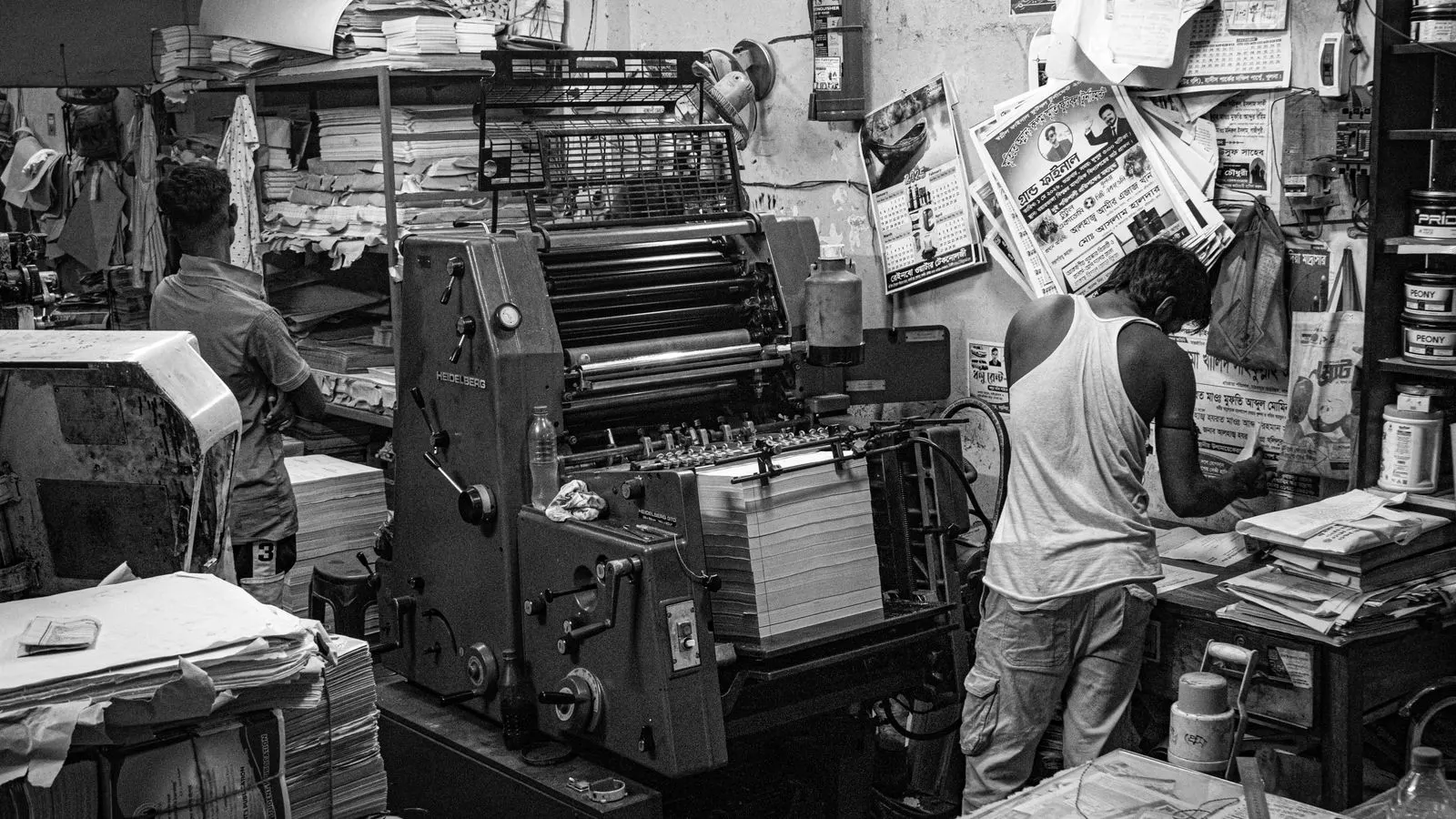
Offset printing requires a plate for each color. A four-color job needs four plates. Each plate must be made, inspected, and installed on the press. The cost of the plates is usually spread across the total run. At small quantities, that cost is high per unit. At large quantities, the plate cost becomes a small fraction of the total.
The unit price also depends on the box construction. A box made from B-flute or C-flute costs more to print than one made from E-flute. The board thickness and the number of printing passes matter. A two-color job is cheaper than a four-color job. A box with a full-bleed design costs more than one with a small logo in the corner.
The finish adds another layer. A matte lamination or a gloss varnish costs more than no finish. A spot UV or a metallic ink adds a separate pass and a separate cost. If the importer needs the box printed on both the top and the bottom, the price goes up again.
How production lead time changes by method
The production lead time is the number of days between the signed proof and the finished boxes. It is not just the time the press runs. It includes the time for file preparation, proofing, plate making, press setup, drying, and cutting.
Digital printing has a shorter lead time. The file is checked, the proof is approved, and the press runs. The setup is quick. A small digital run can be on the floor in one or two days. The lead time is driven by the number of colors and the complexity of the file, not by the physical setup of the press.
Offset printing has a longer lead time. The first step is to make the plates. This takes time. The printer must also check the registration of each color on the press. If the box has a complex design, the setup time increases. The drying time for the ink is also longer on offset presses.
The lead time also depends on the printer’s schedule. A busy factory may have a waiting list. A small local shop may turn around a digital job quickly, but a large offset shop may have a two-week lead time for a standard run. The importer should not assume that the quote includes the full lead time. The quote may show the price, but the delivery date is a separate commitment.
How to write a clear RFQ
A clear Request for Quote prevents back and forth. It saves time and reduces the chance of a wrong quote. The importer should provide the following information in the RFQ.
- Box dimensions and quantity per SKU.
- Flute type and board grade.
- Number of ink colors and whether the design is full-bleed or logo only.
- Required finish, such as no finish, matte, gloss, or spot UV.
- Target quantity for the first order and the expected annual volume.
- Required delivery date and the location of the delivery.
- Any special requirements, such as a specific ink, a special color, or a sample box.
The RFQ should be written in a single document. If the importer sends the information in separate emails, the printer may miss a detail. A missing detail leads to a wrong quote or a delay. The importer should also state whether the quote should include freight or just the price at the factory.
A good RFQ asks for the lead time in writing. The printer should confirm the date when the boxes will be ready for shipment. This date should be based on the signed proof, not on the date the RFQ was sent.
How to compare quotes fairly
Comparing two quotes is easy when the boxes are identical. It is hard when the boxes are different. One quote may be for a four-color box with a gloss finish. The other may be for a two-color box with no finish. The price per unit does not mean much if the boxes are not the same.
The importer should compare quotes using a simple matrix. The matrix should have a row for each cost driver. The columns should be the two or more quotes. The rows should be box size, quantity, ink count, finish, plate cost, press time, and lead time.
When the importer fills in the matrix, the real differences appear. One quote may be cheaper per unit but has a longer lead time. Another may be more expensive per unit but delivers the boxes in half the time. The importer must decide which factor matters more.
The importer should also ask about the proof. Some printers include a physical proof in the quote. Some do not. The price difference for a proof is small, but the time difference is large. A missing proof can cause a delay if the importer discovers a mistake after the boxes are printed.
When digital printing makes financial sense
Digital printing is usually the better choice for small runs. The minimum quantity is lower. The cost per unit is higher, but the total cost for a small run is lower than the cost of an offset run. The lead time is shorter, which reduces the risk of a late delivery.
Digital printing is also better for short production runs. If the importer needs a new box for a seasonal product or a limited edition, digital printing avoids the risk of a large offset run that may not be used. The boxes can be printed in smaller batches, which reduces the risk of waste.
The cost per unit for digital printing drops as the quantity increases. It does not drop as fast as the cost per unit for offset printing, but it still drops. The importer should ask the printer for a price break at a higher quantity. The price break may be significant enough to justify a larger order.
When offset printing makes financial sense
Offset printing is usually the better choice for large runs. The cost per unit drops as the quantity increases. The plate cost is spread over many boxes. The press time is efficient because the plates are set up once and the press runs continuously.
Offset printing is also better for high-volume, recurring orders. If the importer prints the same box every month, the plates can be stored and reused. This reduces the cost of the next run. The lead time may be longer, but the cost per unit is lower.
The importer should consider the lead time when choosing offset printing. If the deadline is tight, offset printing may not be the right choice. The importer should confirm the lead time with the printer before signing the contract. A long lead time can cause a problem if the product is not in the market yet.
A table of cost drivers
The table below shows the main cost drivers for digital and offset printing. The importer should use this table when reviewing quotes.
| Cost Driver | Digital Printing | Offset Printing |
|---|---|---|
| Plate Cost | Low or none | High for each color |
| Setup Time | Short | Long |
| Minimum Quantity | Low | High |
| Unit Cost at Low Volume | Higher | Lower |
| Unit Cost at High Volume | Higher | Lower |
| Lead Time | Short | Long |
| Changeover Cost | Low | High |
| File Preparation | Standard | More complex |
The table shows that the cost drivers are not always the same. The importer should look at the total cost, not just the unit cost. The total cost includes the plate cost, the setup cost, and the finish cost. The lead time is also a cost, because a late delivery can cause a problem for the importer.
How to reduce the cost and the lead time
The importer can reduce the cost by simplifying the design. A two-color job costs less than a four-color job. A logo in the corner costs less than a full-bleed design. The importer should also reduce the number of boxes per SKU. Fewer SKUs means fewer setups and a lower cost.
The importer can reduce the lead time by sending the file early. The file should be in a format that the printer can use. The printer should be able to open the file without asking for changes. The importer should also approve the proof quickly. A delayed approval delays the production.
The importer should also ask the printer about the drying time. Some inks take longer to dry than others. The printer should confirm the drying time in the quote. A long drying time can cause a problem if the boxes need to be packed immediately.
The importer should also ask about the quality checks. The printer should perform a registration check and a color check. The importer should ask for a sample box before the full run. The sample box should be inspected for color, registration, and finish. If the sample box is good, the full run is more likely to be good.
Frequently asked questions
What is the main cost difference between digital and offset printing?
Digital printing has a higher cost per unit but a lower minimum quantity. Offset printing has a lower cost per unit at high volumes but a higher setup cost.
How does the lead time change for a small run?
A small run usually has a shorter lead time with digital printing. Offset printing requires plate making and a longer setup time, which increases the lead time.
Can I compare a digital quote and an offset quote directly?
No, you cannot compare them directly if the boxes are different. You must compare them using the same box size, ink count, and finish.
What should I include in my RFQ to get an accurate quote?
Include the box dimensions, quantity, flute type, ink count, finish, and the required delivery date. You should also include the location of the delivery.
How can I reduce the cost of my printed boxes?
You can reduce the cost by simplifying the design, reducing the number of colors, and increasing the quantity per order. You should also ask for a price break at a higher quantity.